Journalism Resource Guide on Mental Health Reporting
The Carter Center
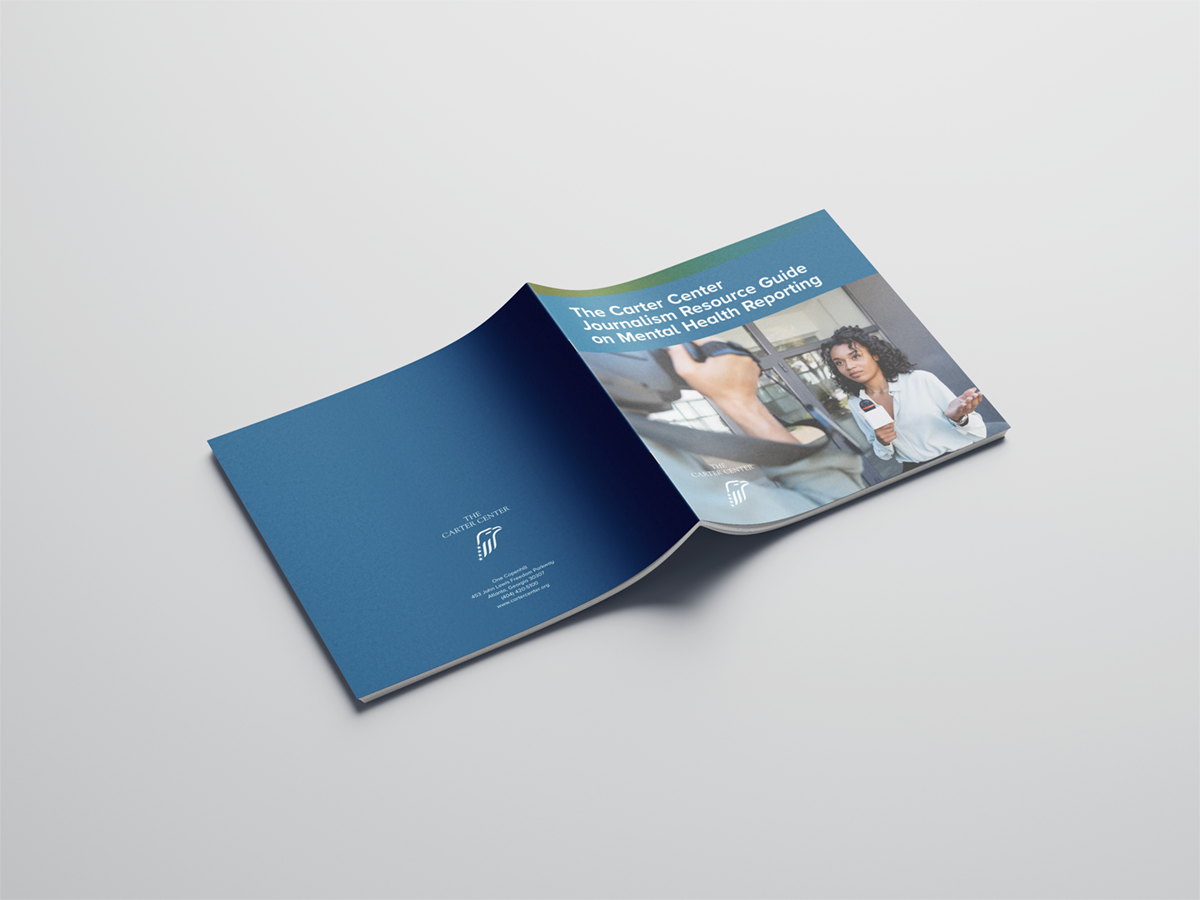
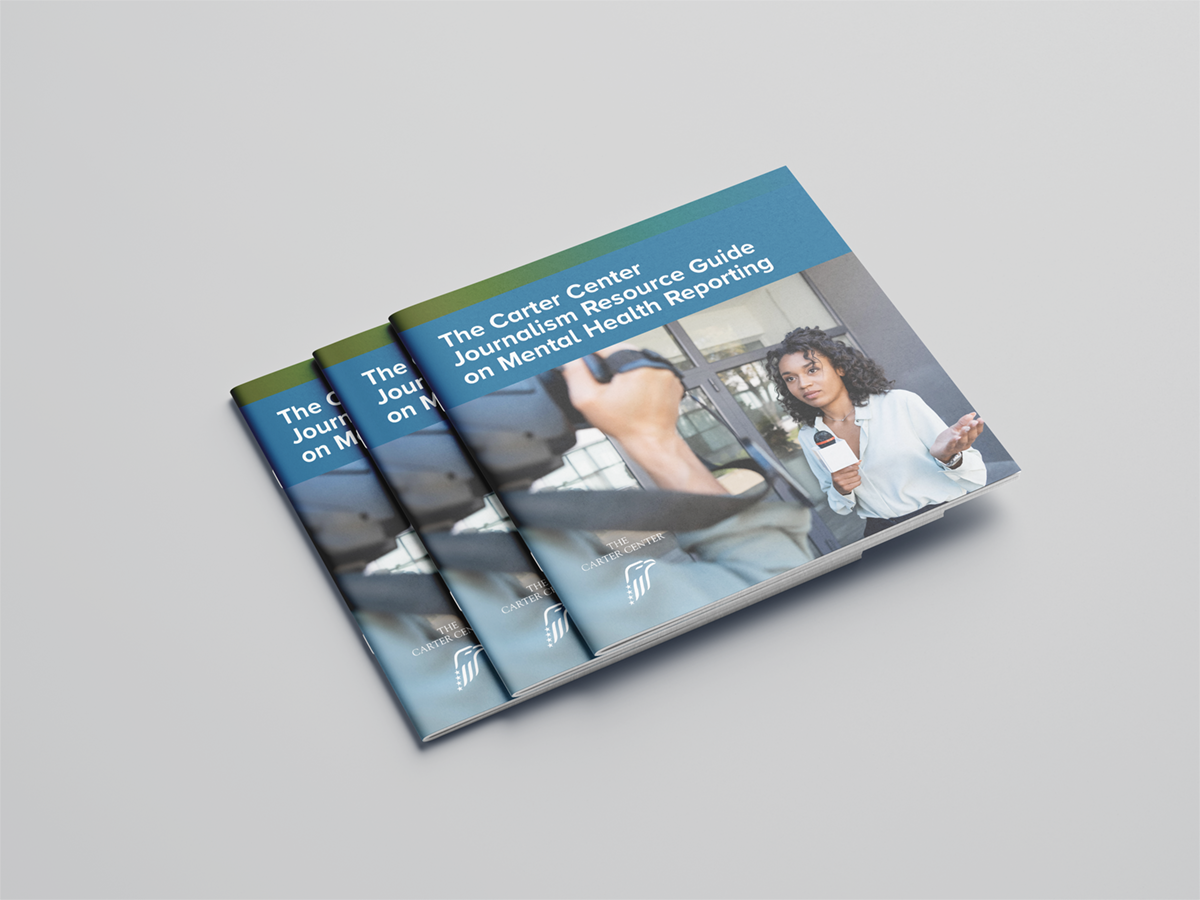
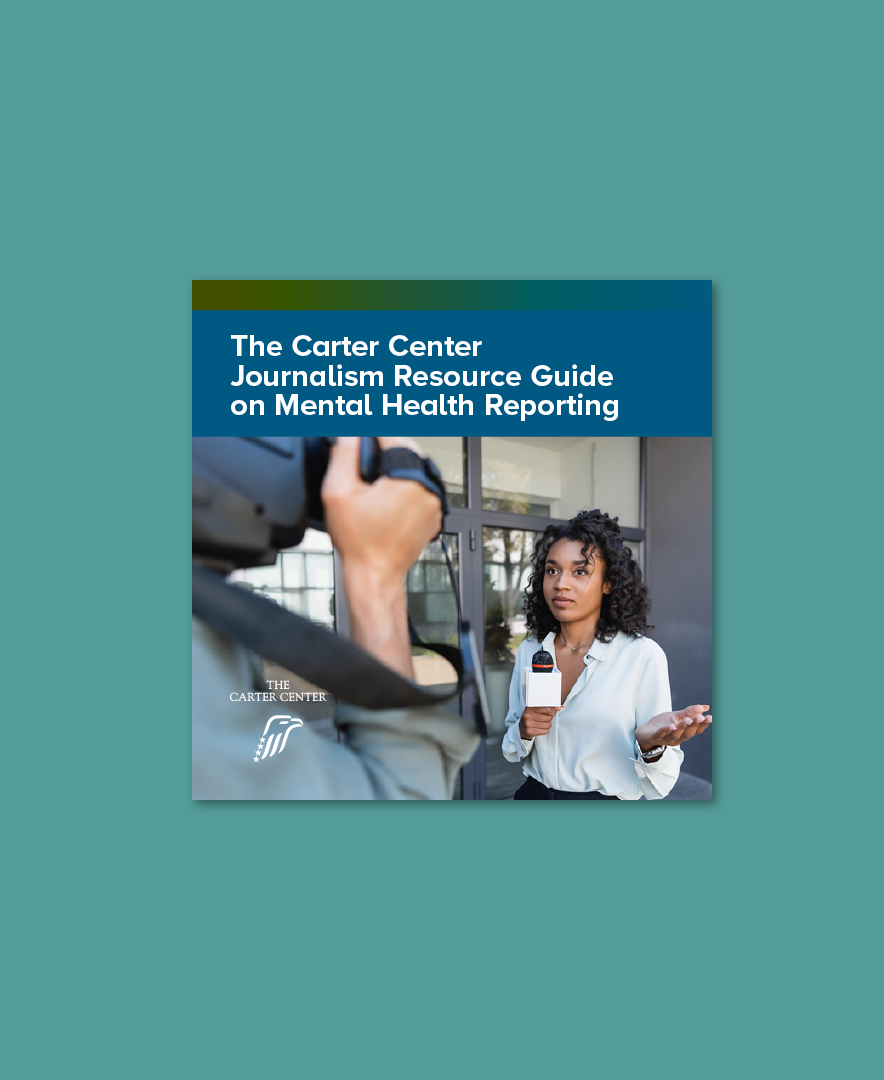
Print and interactive brochure design for a living resource on respectful, accurate mental health reporting
Some publications are designed to inform. Others are designed to change the way people approach their work.
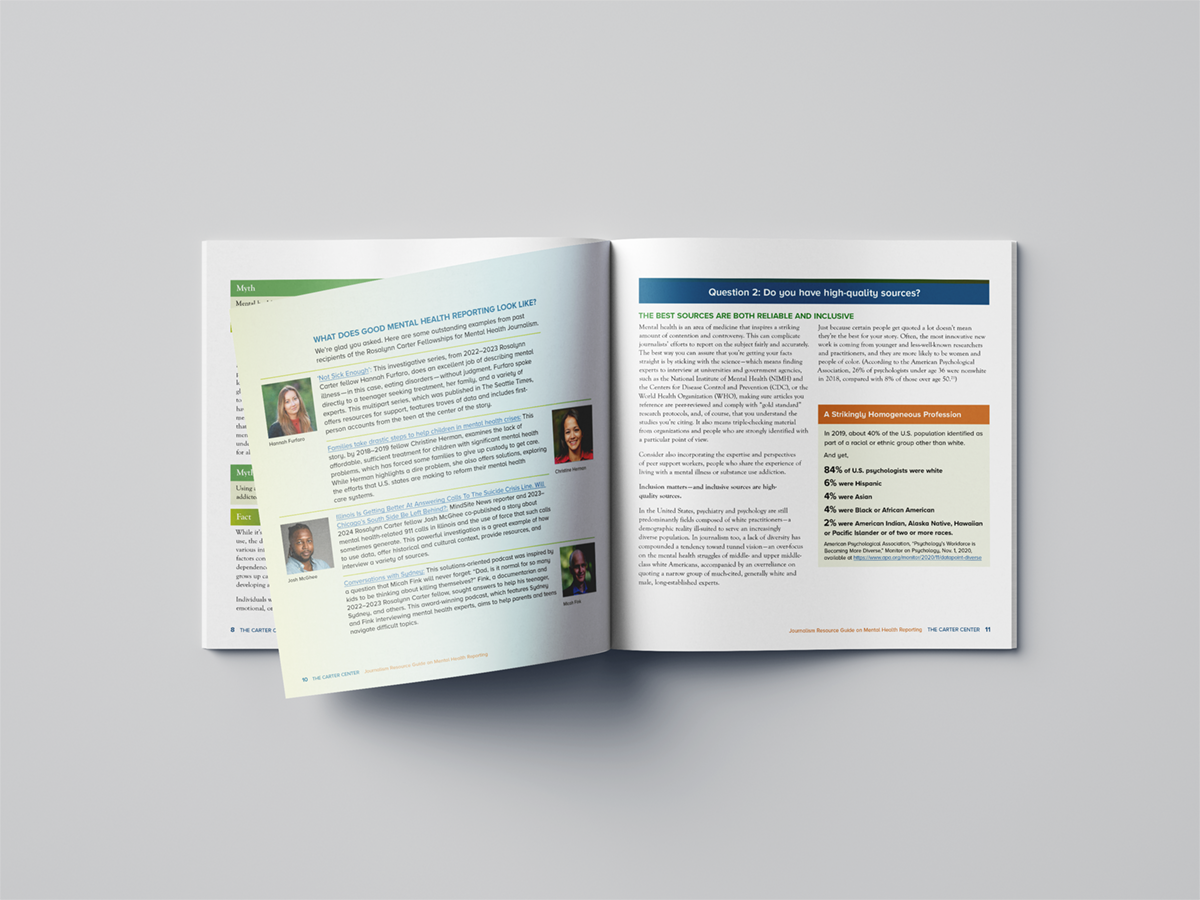
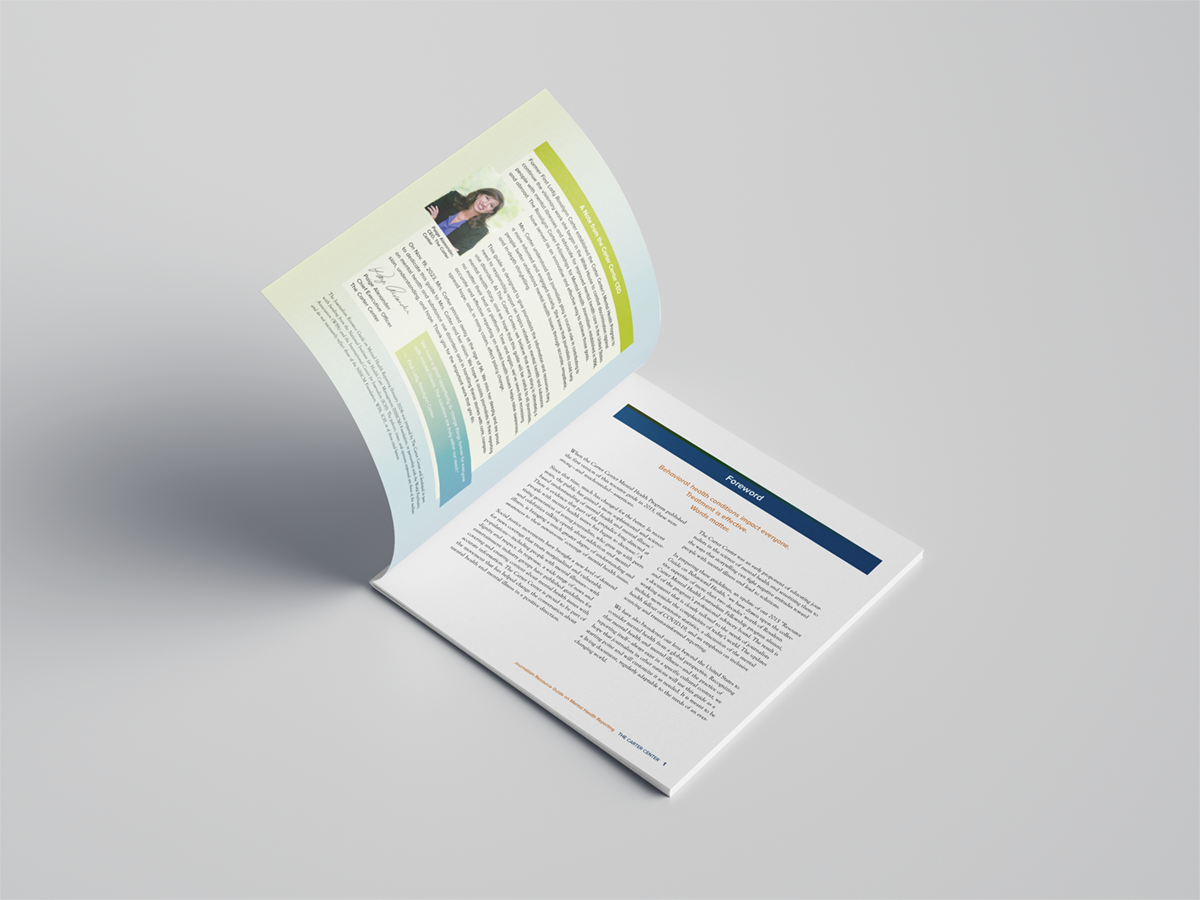
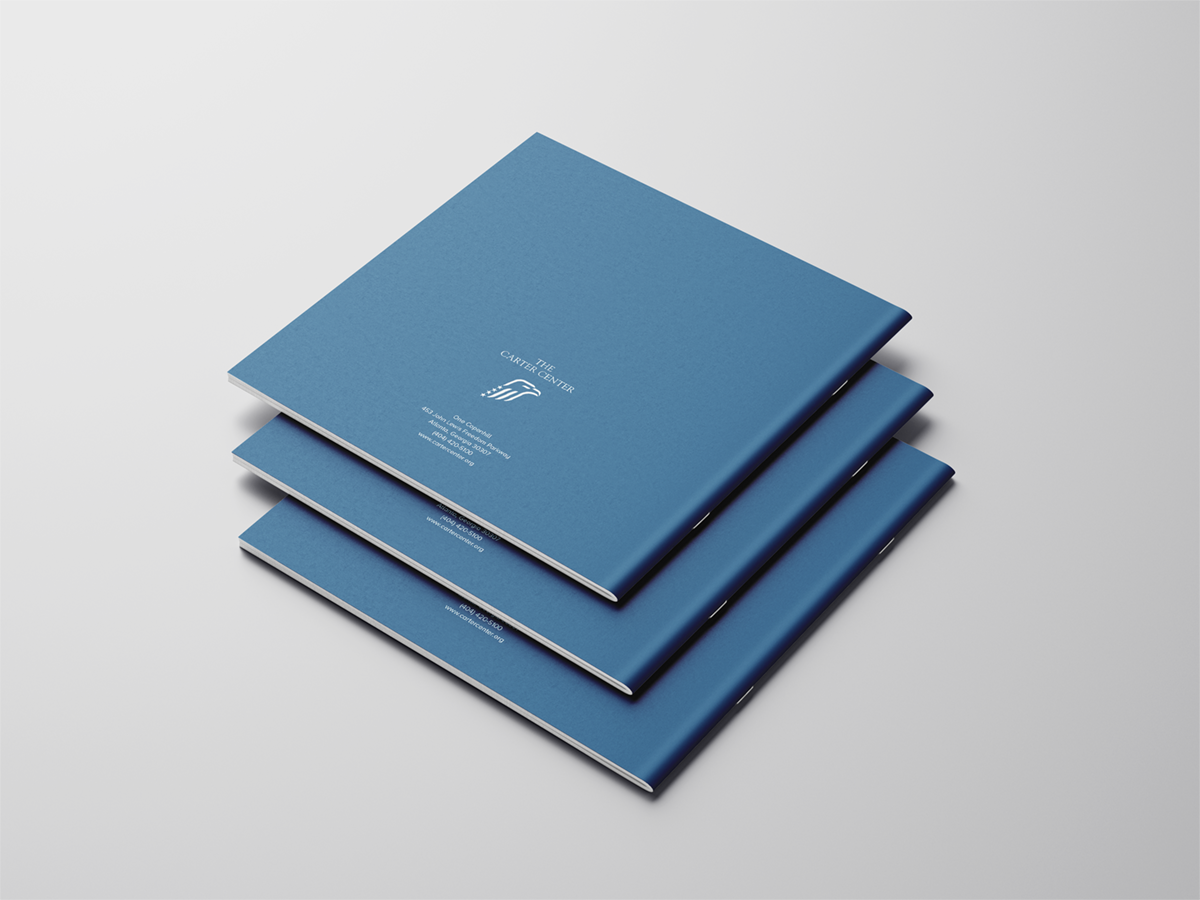
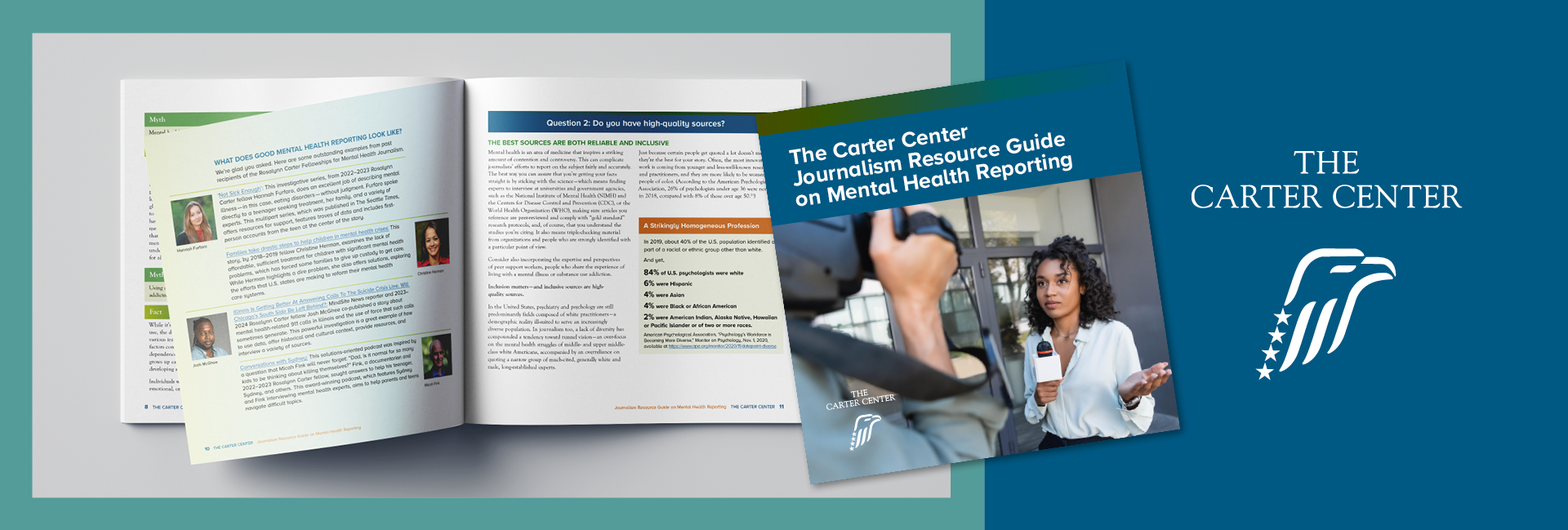
This 8.5" x 8.5", 24-page resource guide for The Carter Center was created to help journalists report on mental health with accuracy, dignity, and care. Originally building on the Carter Center’s 2015 behavioral health reporting guide, this updated version reflects a more complex media landscape, including the mental health impact of COVID-19, trauma-informed reporting, inclusive sourcing, global perspectives, and the evolving language around mental illness.
At the heart of the guide is a simple but powerful idea: words matter.
The Challenge
This project required a design system that could hold a significant amount of information without overwhelming the reader.
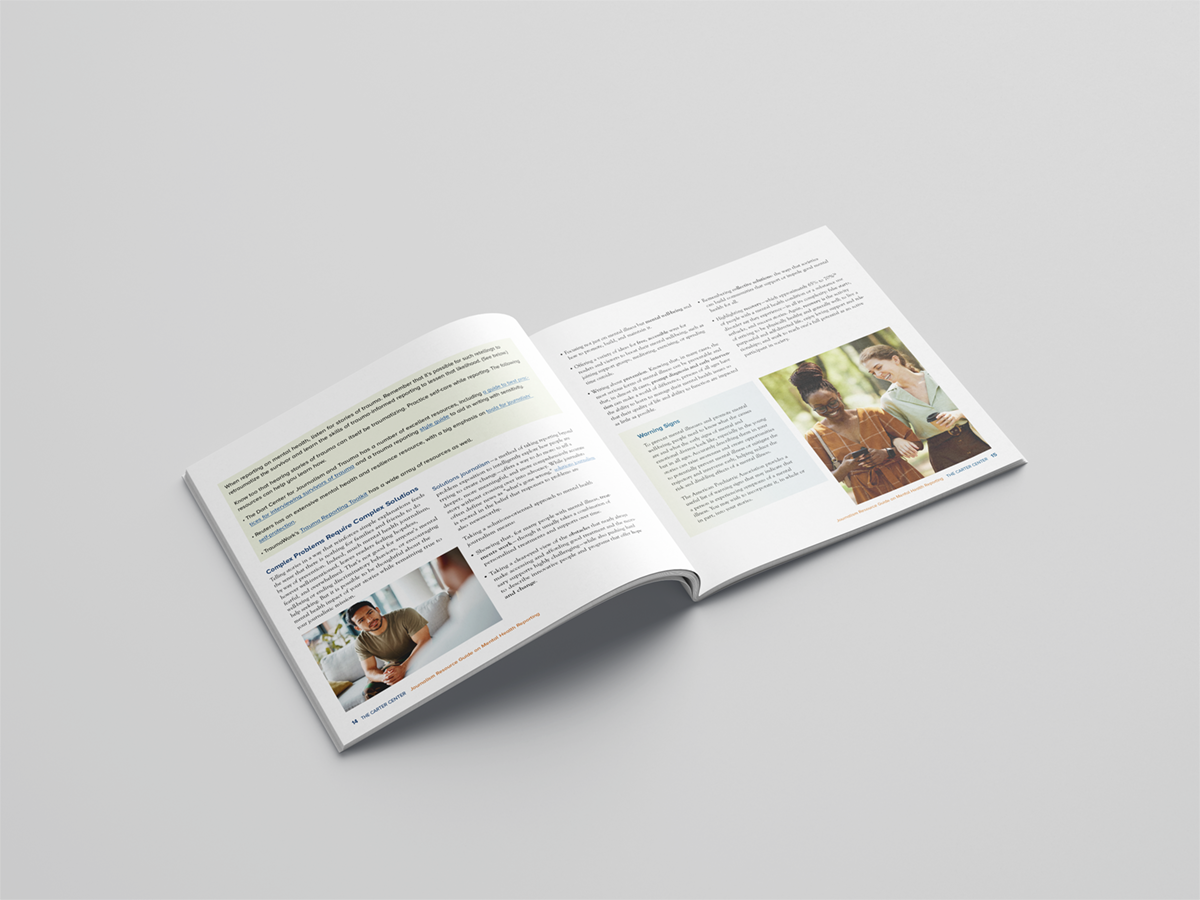
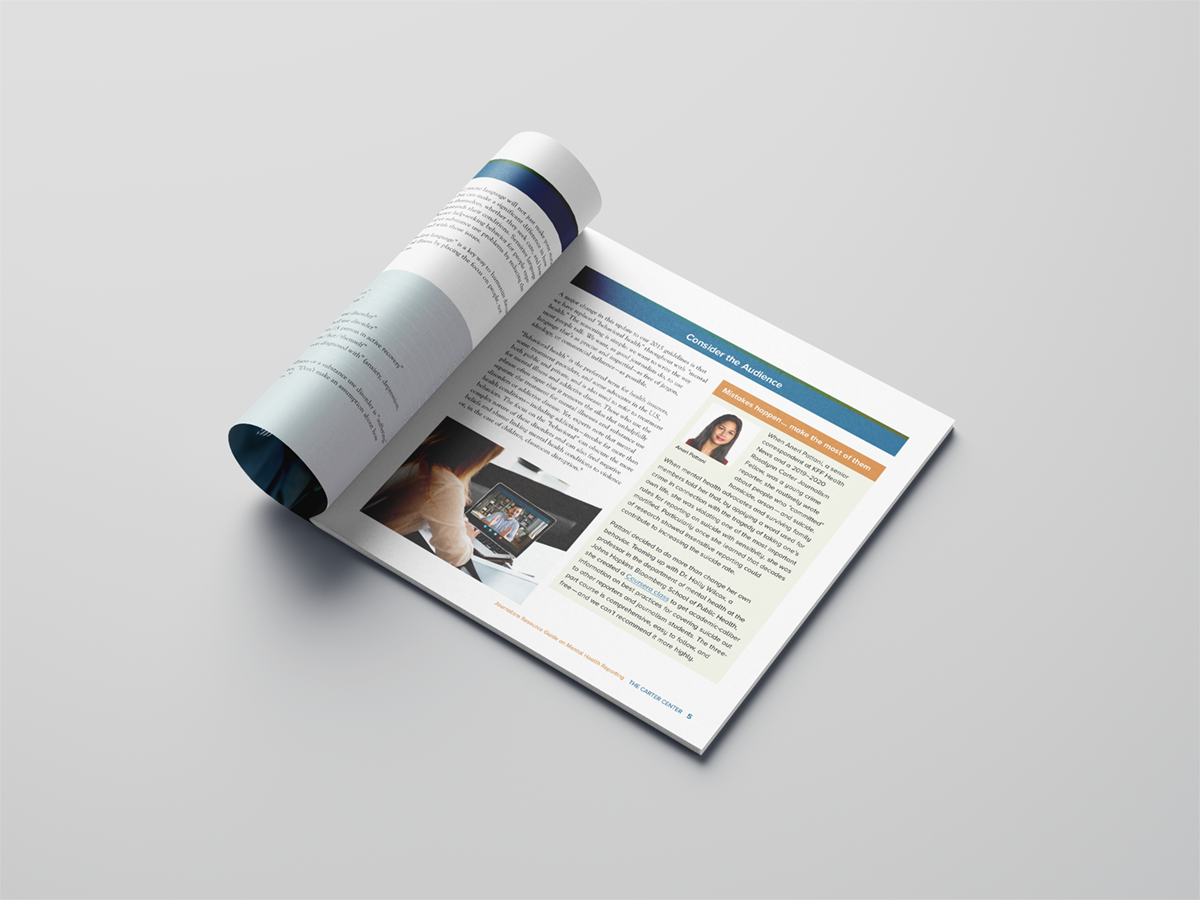
The guide included statistics, reporting considerations, best practices, terminology guidance, hotlines, safety resources, toolkits, endnotes, and links to additional reading. It also needed to function in two formats: as a printed brochure handed out in person, and as an interactive online PDF with hyperlinks to resources throughout.
Adding to the complexity, the content was still evolving when the project began. Final copy was not fully complete, which meant the layout had to stay flexible through multiple rounds of edits, additions, and refinements.
The Approach
We designed the guide with clarity and calm at the center.
A soft green-to-light-blue gradient gave the piece a hopeful, approachable tone while still feeling professional and trustworthy. Generous white space helped keep the content readable, and a clean editorial structure allowed dense information to feel organized rather than heavy.
The visual system combined carefully selected stock photography with images from past journalism fellowship participants, connecting the guide’s practical reporting guidance to the real people and professional community behind it.
Because this piece needed to live beyond print, we also designed with digital use in mind. Hyperlinks, resource references, and endnotes were treated as part of the reader experience, not as afterthoughts.
The Result
The final brochure became more than a printed handout. It became a living, breathing resource for journalists navigating one of the most sensitive and important areas of public reporting.
The finished piece is calm, clear, and highly usable, supporting The Carter Center’s long-standing commitment to improving public understanding of mental health and reducing stigma through better storytelling.
For a topic where language carries real consequences, the design had to do the same thing the guide asks of journalists: handle the material with respect, precision, and care.
Project Hightlights
Client: The Carter Center
Publication: Journalism Resource Guide on Mental Health Reporting
Since: Early 2015
Frequency: Annually
Audience: Journalist and the global community
Format: 24 page brochure
Services: Editorial design, print production, mailing coordination